

Foam Fire Extinguishers in Liverpool, St Helens, Knowsley, Southport, Warrington, Wigan, Widnes & Runcorn
Foam fire extinguishers are one of the most versatile specifications for commercial premises, addressing both Class A fires (paper, wood, textiles, plastics) and Class B fires (flammable liquids including petrol, oils, and solvents) from a single unit. For workshops, garages, warehouses handling flammable stock, hotels, restaurants, and any premises with both solid combustible and flammable liquid risks, foam extinguishers deliver dual-class cover more economically than deploying separate water and CO2 extinguishers. Modern foam formulations are also more environmentally responsible than earlier generations, with fluorine-free foam progressively replacing AFFF (aqueous film-forming foam) in commercial specifications.
WOSS:UK supplies, installs, and services foam fire extinguishers across Liverpool, the Wirral, St Helens, Knowsley, Sefton, Southport, Halton, Warrington, and Wigan. We stock both AFFF and fluorine-free foam formulations in 6-litre and 9-litre commercial sizes, with 3-litre sizes available for smaller applications. Every extinguisher is manufactured to BS EN 3-7, positioned in accordance with BS 5306-8, and serviced annually per BS 5306-3. Our engineers produce a written certificate for every service visit and update the label on each extinguisher confirming the next service due date. For Liverpool businesses currently using AFFF and needing to migrate to fluorine-free foam under evolving environmental regulation, we can also handle the switch-out as part of a scheduled service programme.

What foam extinguishers are used for
Foam extinguishers work by two mechanisms simultaneously: the foam blanket smothers flammable liquid fires by cutting off oxygen at the surface, and the water content cools Class A solid combustibles to prevent re-ignition. This dual mechanism is what makes foam more versatile than either pure water or CO2 alone.
Class A fires (paper, wood, textiles, plastics)
Foam is effective on standard solid combustible fires and is often specified in preference to pure water extinguishers where flammable liquids are also present. Common Liverpool applications include workshops, warehouses, hotels, restaurants (excluding kitchen cooking-oil zones which require wet chemical), retail premises with mixed stock, and any general commercial premises requiring flexible cover.
Class B fires (flammable liquids).
Foam forms a film across the surface of the burning liquid, cutting off oxygen and suppressing vapour production. Common applications include garages, forecourts, workshops handling petrol, diesel, or solvents, vehicle-adjacent premises across the Speke and Aintree industrial areas, chemical stores, and premises handling paints, thinners, or lubricants.
Not suitable for electrical fires
Foam contains water and conducts electricity, which creates an electrocution risk if applied to live electrical equipment. CO2 is the correct specification for electrical fire cover. In practice, most Liverpool premises carry foam and CO2 together to cover both categories.
Not suitable for Class F cooking oil fires.
Foam is not chemically suited to Class F fires and can splash hot cooking oil. Wet chemical extinguishers are the required specification for commercial kitchens.
AFFF vs fluorine-free foam
The foam extinguisher market is undergoing significant change driven by environmental regulation, and understanding the current position matters for any Liverpool business specifying foam extinguishers today.
-
AFFF (Aqueous Film-Forming Foam) was the industry standard for decades because it produces a highly effective aqueous film on the surface of flammable liquid fires. AFFF formulations contain per- and polyfluoroalkyl substances (PFAS), which are highly persistent environmental pollutants now recognised as significant health and environmental risks. UK and EU regulation is progressively restricting PFAS use, with C8-PFAS already banned and broader PFAS restrictions in progress. Existing AFFF stock remains legal to use during its service life, but replacement stock is increasingly moving to fluorine-free formulations.
-
Fluorine-free foam (F3) uses modern surfactant chemistry to deliver comparable performance without PFAS content. Modern F3 formulations from mainstream manufacturers now match AFFF performance for most commercial applications and are the recommended specification for any new foam extinguisher installation across Merseyside. WOSS:UK specifies F3 as standard on new installations, with AFFF supplied only where existing installations require compatibility with older stock during transition.
For businesses currently holding AFFF stock, the practical approach is typically to run existing units through to end-of-life and specify F3 replacement at that point. This spreads the environmental transition across the normal replacement cycle without imposing capital cost.
Sizes and specification

1L Foam Fire Extinguisher
This 1-litre foam fire extinguisher features a compact design, making it perfect for tight spaces in your vehicle or home. This extinguisher allows you to tackle small fires before they escalate.

2L Foam Fire Extinguisher
An effective choice for small fires, the 2-litre foam fire extinguisher is ideal for installation in vans, cars, and homes. Filled with AFFF, it smothers flames by cutting off the oxygen supply and has a cooling effect to prevent re-ignition.

6L Foam Fire Extinguisher
Designed to fight against Class A and B fires, our 6-litre Foam Fire Extinguisher is designed to provide dependable protection in various settings. It's commonly found alongside CO2 extinguishers and is well-suited for shops, offices, hotels, schools, and various public buildings.

9L Foam Fire Extinguisher
Offering exceptional value and performance, our 9 litre Foam Fire Extinguisher is an indispensable tool for fire safety. Its 27A 183B fire rating makes it highly effective for extinguishing fires involving flammable liquids and combustible materials, making it a vital asset in large premises like workshops or filling stations.
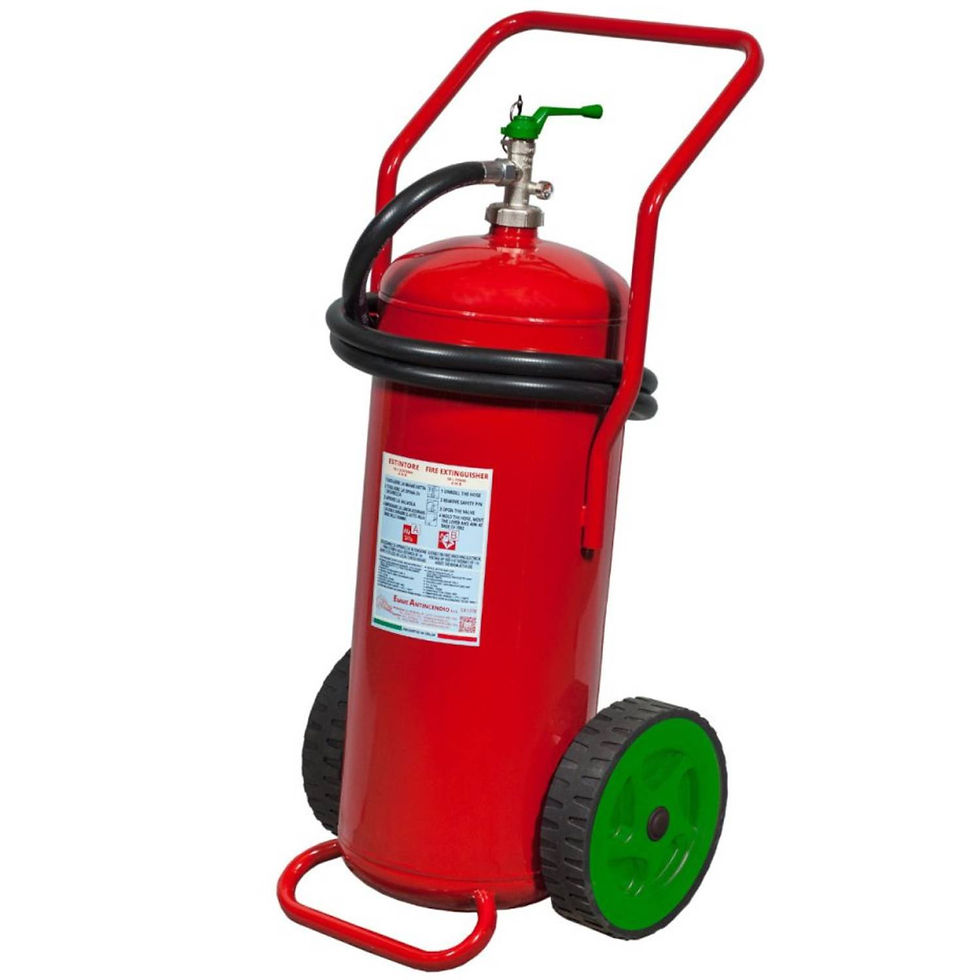
50L Foam Fire Extinguisher (MED)
This 50L foam extinguisher is MED approved and thanks to its wheeled design, one person can transport and deploy it quickly, even in the demanding layout of a warehouse or fuel depot. Its 50-litre size means it’s built for larger fires or extended incidents, making it a sound investment for high-risk zones.

100L Foam Fire Extinguisher
Our 100 litre foam fire extinguisher on wheels is hard to beat where there is a large fire risk. One man operation makes for simple use and a stainless steel body to prevents corrosion and extends the lifespan.

2L Fluorine Free Foam Fire Extinguisher
An excellent choice for smaller-scale fire hazards, this 2-litre fluorine-free foam fire extinguisher delivers an eco-conscious approach to fire safety. It eliminates the use of PFAS, harmful substances commonly found in traditional foam extinguishers, offering a safer, greener alternative.

3L Fluorine Free Foam Fire Extinguisher
The 3-Litre Fluorine-Free Foam Fire Extinguisher is the most compact model in the range, yet it provides an impressive fire rating of 13A 70B. Ideal for use in shops, hotels, public buildings, and locations handling flammable liquids, this extinguisher is an eco-friendly alternative to traditional AFFF models.

6L Fluorine Free Foam Fire Extinguisher
The 6-litre Fluorine-Free Foam Fire Extinguisher is one of the first to hit the market with zero harmful PFAS chemicals. Despite being chemical-free, it boasts an impressive 27A 144B fire rating, ensuring safe and effective protection against both Class A and Class B fires.
9L Fluorine Free Foam Fire Extinguisher
Make an eco-friendly choice with this 9-litre Fluorine-Free Foam Fire Extinguisher instead of traditional AFFF foam. this extinguisher offers comparable performance without any harmful PFAS chemicals. It’s ideal for shops, offices, hotels, schools, public buildings, and any location storing flammable liquids.
2L Boat Foam Fire Extinguisher
(MED Approved)
The boat 2-litre foam fire extinguisher was designed mainly for vehicles and with MED Approval, which means this canister carries the "Ships Wheel" logo so everyone knows it is suitable for use in marinas, boats and yachts and designed for use on flammable liquids.
6L Foam Fire Extinguisher with Anti-Freeze
Our 6ltr foam extinguisher with antifreeze is perfect for low temperature areas, it can be placed in areas that may suffer from temperatures as low as -9°C and still function effectively.
When foam is the right specification for your premises
Foam is the right specification for premises with mixed Class A and Class B fire risks where post-discharge cleanup is acceptable. Typical Liverpool applications include vehicle workshops and garages across the Speke and Aintree industrial areas, hotel restaurants and licensed hospitality venues across the Ropewalks, Cavern Quarter, and Albert Dock, warehouses handling mixed stock including any flammable liquid components, retail premises with paint, oil, or solvent stock, and general commercial premises requiring flexible dual-class cover. Foam is typically deployed alongside CO2 (for electrical fire cover) in workshops and industrial premises, and alongside wet chemical (for kitchen Class F cover) in hospitality premises. For premises where post-discharge cleanup is a specific commercial concern (retail with sensitive stock, hospitality with linen and upholstery, healthcare with sterile requirements), foam may be over-deployed against actual need and a mix of water for Class A cover plus CO2 for other risks can sometimes be a better fit. WOSS:UK fire risk assessments across Liverpool consider both fire class coverage and post-discharge disruption when specifying the extinguisher mix for each zone of your premises. For clients with existing foam extinguisher estates uncertain whether their current specification is right, we can conduct a review visit as part of the ongoing service contract.
To arrange a foam extinguisher survey or discuss a servicing requirement, please click on any of the buttons below


