

Lithium-Ion Fire Extinguishers in Liverpool, St Helens, Knowsley, Southport, Warrington, Wigan, Widnes & Runcorn
Lithium-ion battery fires are a rapidly growing fire safety concern across UK commercial premises, and traditional water, foam, powder, and CO2 extinguishers are largely ineffective or dangerous when applied to lithium battery fires. For any Liverpool premises with electric vehicle charging infrastructure, e-bike storage, e-scooter storage, laptop and phone charging concentrations, battery storage rooms, or lithium-ion equipment repair operations, specialist lithium-ion fire extinguishers are becoming essential specification. The London Fire Brigade attended over 150 lithium-battery fire incidents in 2024 alone, and the trend across Merseyside mirrors the London pattern as EV adoption and micro-mobility use accelerate.
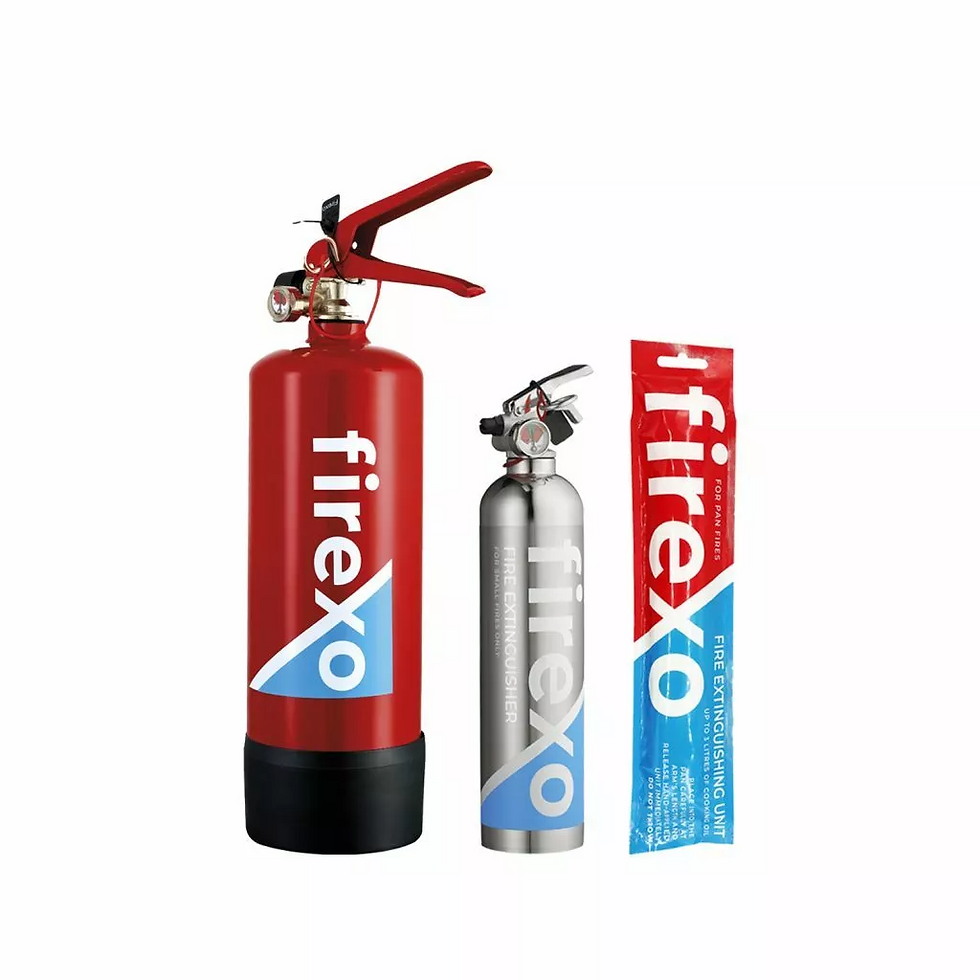
WOSS:UK supplies, installs, and services lithium-ion fire extinguishers across Liverpool, the Wirral, St Helens, Knowsley, Sefton, Southport, Halton, Warrington, and Wigan. We stock AVD (Aqueous Vermiculite Dispersion) extinguishers and water mist formulations specifically rated for lithium-ion battery fires, alongside Firexo multi-class units that also address lithium-ion applications. Every extinguisher we supply is positioned in accordance with the specific lithium-ion hazard identified in your fire risk assessment, serviced annually per BS 5306-3, and supported with the appropriate signage and staff training. For Liverpool businesses that have not yet reviewed their fire risk assessment against current lithium-ion exposure, we recommend booking a survey visit as a priority.
Why lithium-ion batteries burn differently
Lithium-ion battery fires are chemically and physically different from other fire classes, and this drives the specialist extinguisher requirement.
Thermal runaway
A damaged, over-charged, or defective lithium-ion battery cell can enter thermal runaway, a self-sustaining chemical reaction that generates its own heat and oxygen. The reaction propagates cell-to-cell through a battery pack, meaning even effective initial suppression can be followed by re-ignition minutes or hours later as adjacent cells reach runaway temperature.
Toxic gas release
Lithium-ion fires release hydrogen fluoride, carbon monoxide, and other toxic gases at significantly higher concentrations than most other fire types. Personnel exposure is a serious health risk that goes beyond conventional fire response.
Water reactivity concerns
Lithium metal reacts violently with water. Modern lithium-ion cells contain very small amounts of lithium metal in normal state, but damaged cells can release lithium metal that reacts dangerously if water is applied. Standard water and foam extinguishers can therefore make small lithium fires substantially worse.
Traditional extinguisher limitations
CO2 provides no cooling and does not prevent re-ignition. Powder can suppress the immediate flame but does not prevent thermal runaway propagation. Foam suffers the same water reactivity concerns as water. None of the standard commercial extinguisher types adequately address lithium-ion fires.
Specialist extinguisher chemistry
Modern lithium-ion extinguishers use one of two primary mechanisms. AVD (Aqueous Vermiculite Dispersion) coats the burning cells with a fine vermiculite particulate that cools the cells, isolates them from oxygen, and physically separates cells to prevent runaway propagation. Water mist with specific formulations delivers rapid cooling to interrupt the runaway reaction, and has been proven effective on smaller lithium-ion battery fires when applied at appropriate discharge rates.
AVD, water mist, and Firexo comparison
The three primary lithium-ion extinguisher options each have distinct characteristics.
-
AVD (Aqueous Vermiculite Dispersion) is the specialist choice for lithium-ion battery fires and is the extinguisher type most commonly deployed at EV charging infrastructure, e-bike storage, and battery storage rooms. AVD produces a fine vermiculite coating that isolates burning cells, and the aqueous carrier provides cooling. Effective on small to medium lithium-ion fires. Typical sizing 6-litre or 9-litre units for commercial application.
-
Water mist with specific lithium-ion rating uses high-pressure fine water mist that cools cells rapidly without the water reactivity concern of larger water volumes. Effective on smaller lithium-ion fires and dual-rated for other fire classes depending on the specific product. Water mist is often the correct choice for premises requiring both lithium-ion cover and general Class A cover from a single extinguisher type.
-
Firexo is a multi-class extinguisher approved for Class A, B, D, F, and lithium-ion fires from a single unit. Firexo is increasingly specified for premises with diverse fire risks where a single extinguisher type simplifies staff response and reduces extinguisher count. Firexo has been independently tested on lithium-ion battery fires with documented effectiveness.
For Liverpool premises requiring lithium-ion cover as part of a broader fire safety review, WOSS:UK typically specifies AVD for dedicated lithium-ion positions (EV charging, e-bike storage, battery rooms) and water mist or Firexo where multi-class flexibility matters. See our firexo Extinguisher page for detail on Firexo applications.
Where lithium-ion cover is now required
The fire risk assessment for many Liverpool commercial premises now needs to consider lithium-ion exposure in ways that were not standard three years ago.
Electric vehicle charging infrastructure
Any premises with EV chargers on site, including car parks, forecourts, corporate campuses, retail parks, and residential developments across Merseyside, now needs to consider EV battery fire response. Passenger EV batteries typically hold 40 to 100 kWh of energy, and vehicle fires involving lithium-ion batteries are among the most challenging fires that emergency services face. Specialist extinguisher cover at charging positions is increasingly recommended.
E-bike and e-scooter storage and charging
Retail premises selling e-bikes or e-scooters, hospitality premises offering guest e-bike storage, workplaces with employee cycle facilities, and residential developments with communal cycle stores all face lithium-ion fire risk from batteries charging or stored unattended. E-bike battery fires have been responsible for a significant number of UK residential fatalities over the past three years.
Battery storage rooms
Any premises with dedicated lithium-ion battery storage (spare vehicle batteries, backup power systems, tool batteries, spare device batteries) requires specific fire cover for the battery storage room. Battery storage room design guidance from FIA and other industry bodies now consistently recommends lithium-ion specific extinguisher cover.
Laptop and phone charging concentrations
Any premises with significant concentrations of laptops, phones, tablets, or other lithium-battery devices charging simultaneously (open-plan offices, education campuses, hotel meeting rooms) faces cumulative lithium-ion fire risk. Individual device risk is low, but concentration matters.
Lithium-ion equipment repair operations
Any premises repairing or servicing lithium-ion equipment (device repair, e-bike servicing, EV maintenance) faces elevated risk from damaged batteries and requires specialist cover.
Sizes and specification

2L FireXO Fire Extinguisher
Firexo's 2-litre All Fires Extinguisher showcases impressive fire ratings, temperature ranges, and discharge times, and possesses full BSI approval. By having a single extinguisher suitable for all fire types, the need for multiple extinguishers is eliminated, making it the ideal choice for homes, vehicles, and businesses. This eradicates confusion regarding which extinguisher to use and reduces training requirements.

6L FireXO Fire Extinguisher
Firexo's 6-litre All Fires Extinguisher ensures that your business requires only a single unit in each zone, eliminating the need for pairs like the conventional water and CO2 combination. This significantly reduces confusion during fire incidents. With an impressive fire rating of 34A 113B C D 75F, it is also safe for use on electrical fires and those involving lithium-ion batteries. It is the perfect solution for commercial premises, including large kitchens, as it attains the highest class F rating achievable under EN3, providing a competent and cost-effective alternative to Wet Chemical extinguishers.

9L FireXO Fire Extinguisher
With the Firexo 9 litre All Fires Extinguisher, boasting an impressive fire rating of 55A 183B 75F, you can address any fire, including those involving electrical equipment and lithium-ion batteries. Ideal for large commercial properties, the Firexo all fires extinguisher means you can reduce the number of extinguishers you need to provide, which helps to minimise confusion in the event of a fire.
Frequently Asked Questions
Why can't I use a normal fire extinguisher on a lithium-ion battery fire?
Standard water, foam, powder, and CO2 fire extinguishers are largely ineffective on lithium-ion battery fires and can in some cases make the fire worse. For Liverpool premises with electric vehicle charging, e-bike storage, or significant lithium-ion battery presence, specialist lithium-ion extinguishers using AVD, water mist, or Firexo formulations are the correct specification.
The core issue is thermal runaway. A damaged or defective lithium-ion cell can enter a self-sustaining chemical reaction that generates its own heat and oxygen, propagating cell-to-cell through the battery pack. Water and foam apply liquid that flashes to steam on contact with the burning cells, releasing more heat energy back into the pack and potentially accelerating runaway. Water can also react violently with any lithium metal released from damaged cells. CO2 provides no cooling effect, so while it may briefly suppress visible flame it does not interrupt the runaway reaction underneath, and re-ignition is near-certain as CO2 disperses. Powder can suppress flame temporarily but does not cool the cells or prevent propagation. The consequence is that a fire that appears extinguished can re-ignite minutes or hours later as adjacent cells reach runaway temperature, sometimes catastrophically. Specialist lithium-ion extinguishers use different chemistry to actually stop the reaction rather than just suppress the immediate flame. For any Liverpool premises with significant lithium-ion exposure, updating the fire risk assessment to reflect this hazard and specifying appropriate cover is genuinely important.
What size lithium-ion fire extinguisher do I need for EV charging in Liverpool?
For EV charging infrastructure at Liverpool commercial premises, 6-litre or 9-litre AVD (Aqueous Vermiculite Dispersion) extinguishers are the typical specification, positioned within 5 to 10 metres of each charging point. Larger commercial EV charging installations may require multiple extinguisher positions and consideration of fixed suppression systems in enclosed charging areas.
The specific sizing depends on the number of charge points, the type of vehicles being charged (passenger EVs versus commercial vans versus HGVs, with battery capacity increasing significantly), the layout of the charging area (open forecourt versus enclosed car park versus dedicated charging bay), and any specific insurance or fleet operator requirements. For a typical Liverpool retail forecourt with 4 to 8 rapid EV chargers, 6-litre or 9-litre AVD extinguishers positioned at multiple locations around the charging area provide effective cover for most incident scenarios. For enclosed commercial car parks with EV chargers on multiple levels, additional consideration is needed for ventilation, potential toxic gas concentration, and evacuation routes. For larger commercial installations, particularly those charging commercial vans or HGVs with substantially larger battery capacities, specialist advice may be warranted and fixed suppression systems in enclosed charging areas are increasingly specified. Rapid EV chargers themselves are also increasingly incorporating on-board fire detection and suppression, which reduces the reliance on portable extinguishers for the initial response. WOSS:UK conducts a lithium-ion specific fire risk assessment as part of any premises with EV charging infrastructure, and we can advise on the correct extinguisher specification for your Merseyside site.
Do I legally need lithium-ion fire extinguishers if I have e-bikes at my Liverpool business?
If your fire risk assessment identifies lithium-ion battery fire risk from e-bike storage or charging at your Liverpool premises, then appropriate fire fighting equipment for that risk is a legal requirement under the Regulatory Reform (Fire Safety) Order 2005. In practice, any premises with e-bike storage or communal e-bike charging should be considering specialist lithium-ion extinguisher cover as part of an updated fire risk assessment.
The specific legal position is that the Fire Safety Order requires appropriate fire fighting equipment for the fire risks identified in the mandatory fire risk assessment. If the fire risk assessment identifies lithium-ion battery fire risk (which it should where e-bikes are stored or charged), then extinguisher cover appropriate to that risk is required. Standard water, foam, powder, or CO2 extinguishers are not appropriate for lithium-ion fires, so their presence alone would not satisfy the requirement. Specialist lithium-ion extinguishers using AVD, water mist, or Firexo formulations are the appropriate cover, and their absence where the risk exists is a potential enforcement issue for Merseyside Fire and Rescue Service inspection. For hospitality premises offering guest e-bike storage, retail premises selling e-bikes, workplaces with employee cycle facilities, and residential developments with communal cycle stores across Liverpool and Merseyside, this is a live compliance issue that many premises have not yet addressed. Beyond the legal requirement, e-bike battery fires have been responsible for a significant number of UK residential fatalities over the past three years, so the practical case for appropriate cover is strong even where legal enforcement has not yet caught up. WOSS:UK can conduct a lithium-ion fire risk assessment review as part of your annual FRA cycle to identify any current gaps.
How much do lithium-ion fire extinguishers cost in Liverpool?
Lithium-ion fire extinguishers in Liverpool typically cost £150 to £280 for a 6-litre AVD unit, £220 to £380 for a 9-litre AVD unit, and £120 to £220 for water mist units rated for lithium-ion applications. Firexo multi-class extinguishers (rated for lithium-ion plus other classes) typically cost £180 to £320 depending on size. Annual servicing is comparable to other extinguisher types at approximately £10 to £16 per unit.
The specialist chemistry, more limited manufacturer competition, and lower production volumes compared to standard extinguisher types drive the higher unit cost for lithium-ion extinguishers compared to standard water, foam, or CO2. Prices are gradually reducing as the market matures and volumes grow, but current pricing sits well above conventional extinguishers. For premises with significant lithium-ion exposure, this cost is unavoidable given the specification requirement. For premises with moderate lithium-ion exposure alongside other fire risks, Firexo multi-class extinguishers can be commercially attractive because a single Firexo unit replaces separate lithium-ion, water, and foam extinguishers at a lower total cost than the sum of the alternatives. Ongoing service cost is comparable to conventional extinguishers. Replacement cycles for AVD and water mist extinguishers follow the standard BS 5306-3 cycle of annual basic service, 5-year extended service, and approximately 10 to 20 year replacement depending on type. For Liverpool premises budgeting for lithium-ion extinguisher deployment, the initial capital cost is typically the largest single line item, with ongoing service cost proportional to the standard extinguisher estate. WOSS:UK provides fixed-fee quotations across Merseyside for both new installations and takeover of existing lithium-ion extinguisher estates.
What is AVD and how does it work on lithium-ion battery fires?
AVD (Aqueous Vermiculite Dispersion) is a specialist fire extinguisher medium designed specifically for lithium-ion battery fires. AVD combines water with fine vermiculite particles that, on discharge, coat the burning battery cells to cool them, isolate them from oxygen, and physically separate individual cells to prevent thermal runaway propagation through the battery pack.
Vermiculite is a naturally-occurring mineral that expands substantially when heated, forming a lightweight thermal-insulating layer. In AVD extinguishers, fine vermiculite particles are suspended in an aqueous carrier that delivers them to the burning cells through a specialised nozzle. On contact with the burning cells, the vermiculite forms a physical barrier that separates cells from surrounding oxygen, the aqueous carrier provides cooling to slow the reaction, and the physical barrier between individual cells prevents heat propagation to adjacent cells (which is what typically drives thermal runaway propagation through the pack). This combined mechanism addresses the specific failure modes of lithium-ion fires in a way that no conventional extinguisher medium can match. AVD has been independently tested on a range of lithium-ion battery sizes and configurations with documented effectiveness, and is now the recommended specification from most UK fire industry bodies for lithium-ion cover at EV charging, e-bike storage, and battery storage applications. WOSS:UK supplies AVD extinguishers alongside water mist and Firexo alternatives, with the specific choice depending on the fire risk profile of your Liverpool premises. AVD units require the same annual servicing cycle as conventional extinguishers, and are supplied with the appropriate BS 5499 signage identifying the lithium-ion cover and the fire classes addressed.


