

Powder Fire Extinguishers Supplier in Liverpool, St Helens, Knowsley, Southport, Warrington, Wigan, Widnes & Runcorn
Powder fire extinguishers offer the broadest fire class coverage of any single extinguisher type, addressing Class A (paper, wood, textiles), Class B (flammable liquids), and Class C (flammable gases) from a single unit. For vehicles, garages, workshops, forecourts, and industrial premises across Liverpool and Merseyside where diverse fire risks coexist, ABC powder extinguishers provide flexible cover that no single-class extinguisher can match. However, powder extinguishers leave substantial residue after discharge, which limits their use in office and hospitality environments where post-discharge cleanup would cause significant secondary disruption. Understanding when powder is the right specification, and when it is not, is central to specifying it correctly.
WOSS:UK supplies, installs, and services powder fire extinguishers across Liverpool, the Wirral, St Helens, Knowsley, Sefton, Southport, Halton, Warrington, and Wigan. We stock ABC multi-purpose powder in 2kg, 4kg, 6kg, and 9kg commercial sizes, and can supply specialist D-class powder for metal fires in specific industrial applications on quotation. Every extinguisher is manufactured to BS EN 3-7, positioned in accordance with BS 5306-8, and serviced annually per BS 5306-3. Our engineers produce a written certificate for every service visit and update the label on each extinguisher confirming the next service due date.
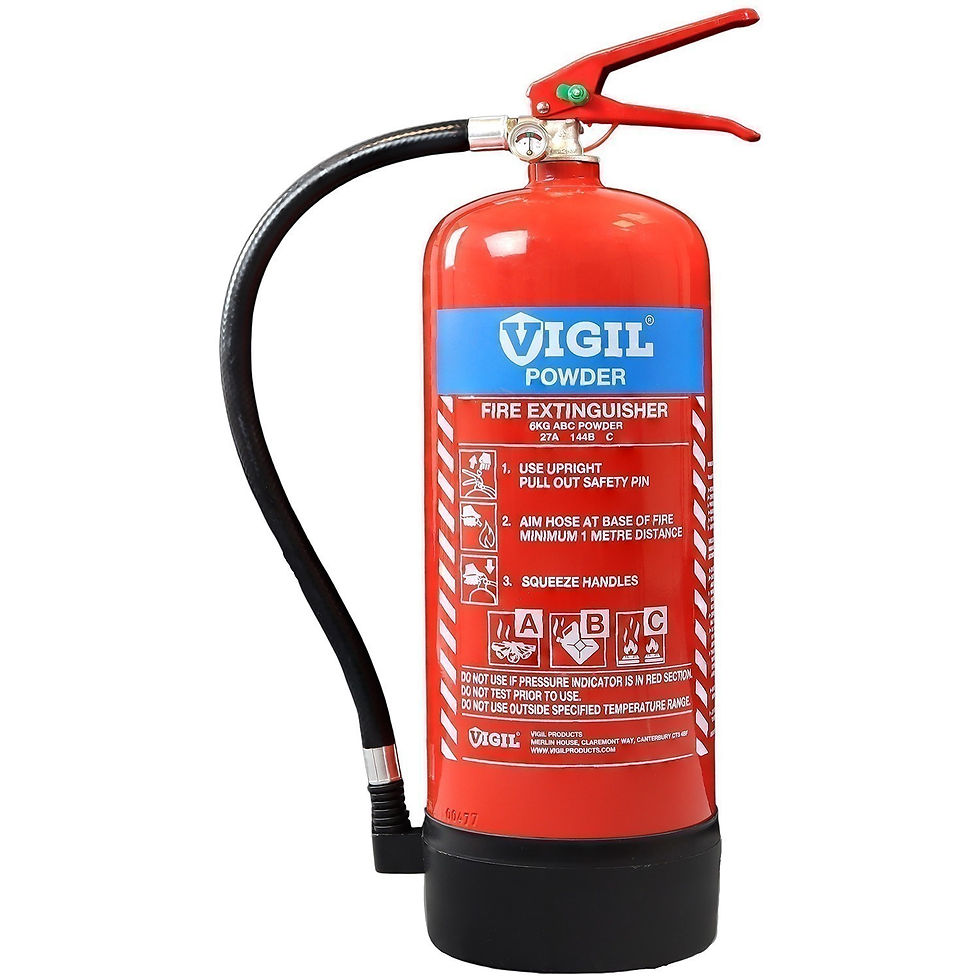
What powder extinguishers are used for
Powder extinguishers work by chemically interrupting the combustion reaction rather than cooling or smothering. The powder decomposes on contact with the fire, releasing gases that inhibit the chemical chain reaction of combustion. This mechanism makes powder highly effective across multiple fire classes but produces the residue that limits deployment in certain environments.
Class A fires (paper, wood, textiles, plastics)
ABC powder is effective on solid combustibles though not as fast-acting as water or foam for cooling. Powder is typically specified where the Class A cover is secondary to Class B or C cover requirements, or where post-discharge cleanup is acceptable.
Class B fires (flammable liquids)
ABC powder is highly effective on petrol, oils, solvents, and other flammable liquids. Common Liverpool applications include garages, forecourts, workshops handling flammable liquids, chemical stores, and vehicle-adjacent premises across Speke, Aintree, and industrial estates across Merseyside.
Class C fires (flammable gases)
ABC powder is one of the few extinguisher types effective on gas fires including LPG, natural gas, hydrogen, and industrial process gases. This is the primary use case that differentiates powder from foam or water alternatives, and is why powder is specified in premises with any significant gas hazard.
Electrical fires
ABC powder is safe to use on live electrical equipment because it does not conduct electricity, though the residue can damage sensitive electronics and CO2 is typically preferred for electrical cover where cleanup matters. Powder is often specified for external electrical infrastructure, industrial control gear, and premises where the electrical fire risk is significant enough to require dedicated cover but CO2 is impractical due to size or accessibility.
Not suitable for Class F cooking oil fires.
Powder does not address the specific chemistry of cooking oil fires and can splash hot oil. Wet chemical extinguishers are the required specification for commercial kitchens.
Sizes and specification

600g Car Fire Extinguisher
This 600g car fire extinguisher is filled with ABC powder and is commonly found in vehicles, homes, caravans, sheds, and any other location where space is limited but fire protection is essential. Despite its compact size, it boasts an impressive 5A 21B C fire rating.

1Kg Powder Fire Extinguisher
The Commander 1kg ABC Dry Powder Fire Extinguisher comes supplied with a transport bracket that have a stainless steel centre strap and are also Kitemarked to BS EN3. It has a fire rating of 8A 34B C.

2kg Powder Fire Extinguisher
The Commander 1kg ABC Dry Powder Fire Extinguisher comes supplied with a transport bracket that have a stainless steel centre strap and are also Kitemarked to BS EN3. It has a fire rating of 13A 70B C.
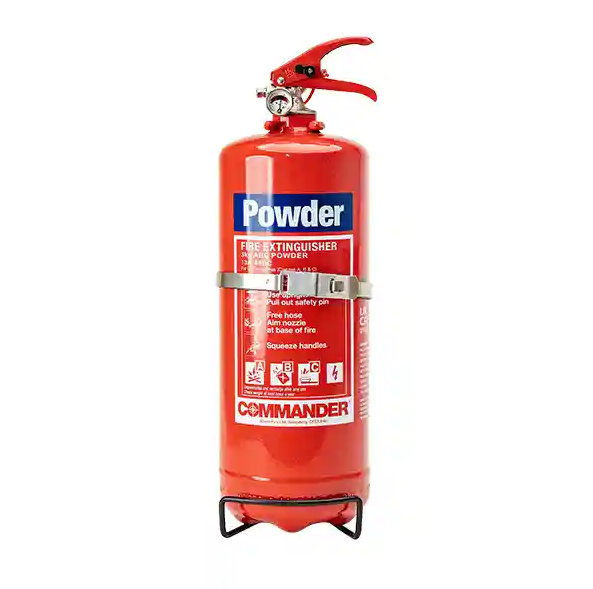
3kg Powder Fire Extinguisher
The Commander 1kg ABC Dry Powder Fire Extinguisher comes supplied with a transport bracket that have a stainless steel centre strap and are also Kitemarked to BS EN3. It has a fire rating of 13A 89B C
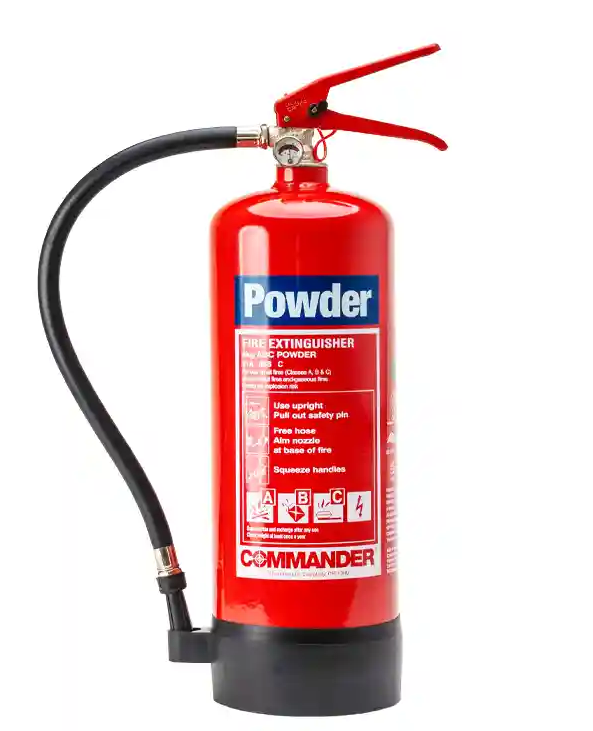
4kg Powder Fire Extinguisher
The CommanderEDGE 4kg ABC Dry Powder Fire Extinguisher has an extremely strong bask skirt, is Kitemarked and has CE-marked brass valve assemblies. It has a fire rating of 21A 89B C.

6kg Powder Fire Extinguisher
This 6kg unit has an extremely strong base skirt and benefits from CE-marked brass valve assemblies. It’s Kitemarked to BS EN3 and has a fire rating of 43A 233B C. Dry Powder is a multi-purpose fire extinguishing medium with excellent knock-down properties.

9kg Powder Fire Extinguisher
The new Commander 9kg ABC Dry Powder Fire Extinguisher features a deep-drawn cylinder, has a fire rating of 34A 233B C and is Kitemarked to BS EN3.

12kg Powder Fire Extinguisher
This 12kg powder fire extinguisher is ideal for vehicles over 7.5 tonnes and is designed for vehicles carrying dangerous goods because it makes them compliant with ADR regulations. This powder extinguisher has all the expected approvals, including the BSI Kitemark, CE Mark, BE EN3 and MED Approval,

25kg Powder Fire Extinguisher
The 25kg powder fire extinguisher contains ABC powder that covers virtually any type of fire and is safe to use around live electrical equipment.
As well as other approvals, it carries the MED Ship's Wheel mark so can be used for shipping or for offshore oilfields.
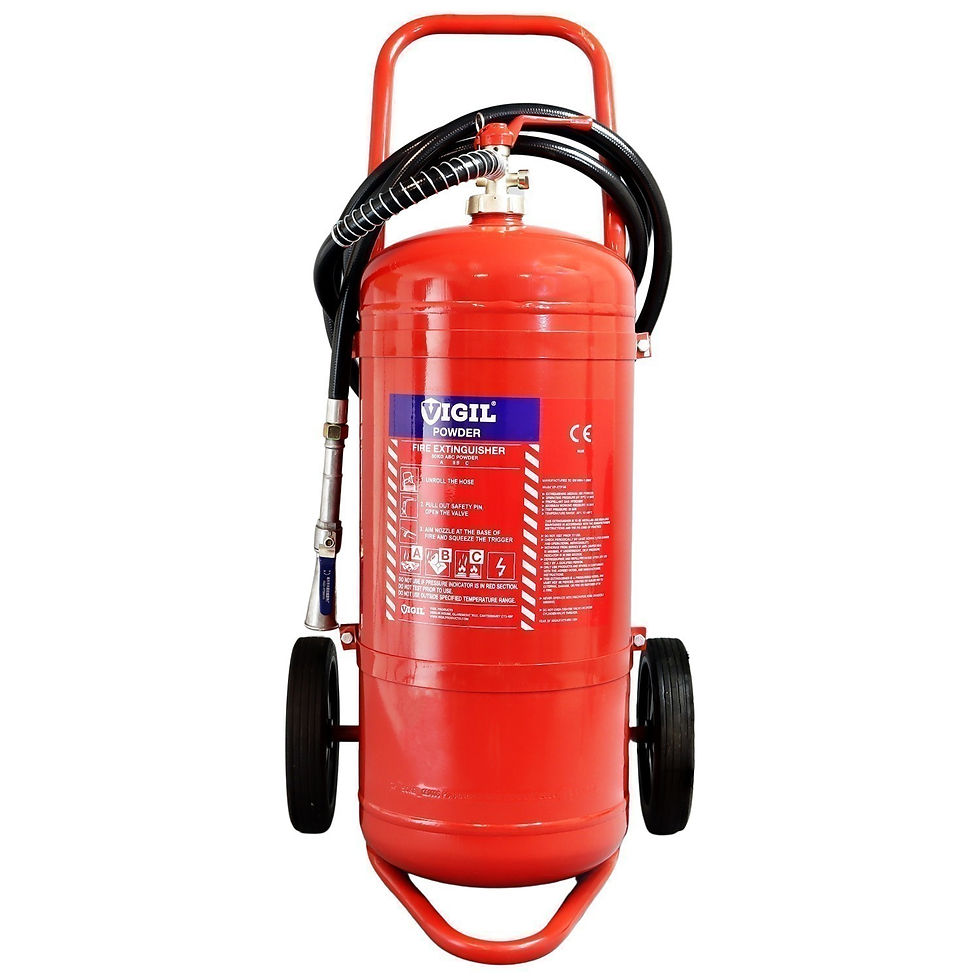
50kg Powder Fire Extinguisher
The 50kg Powder Wheeled Extinguisher is built for places where the risk of large fires is high. Often used in locations like airports and fuel storage areas, this strong extinguisher provides a lot of firefighting power. Easy to operate, it just opens the valve and points the hose at the bottom of the flames.

100kg Powder Fire Extinguisher
Despite weighing in at 155kg, the 100kg powder fire extinguisher is designed for easy operation by one person. EN 1866 and MED approved for marine use, this is a stored pressure version that can be maintained and refilled by any service company. Large solid wheels to cover rough ground at industrial sites, aerodromes, fuel stores, etc.
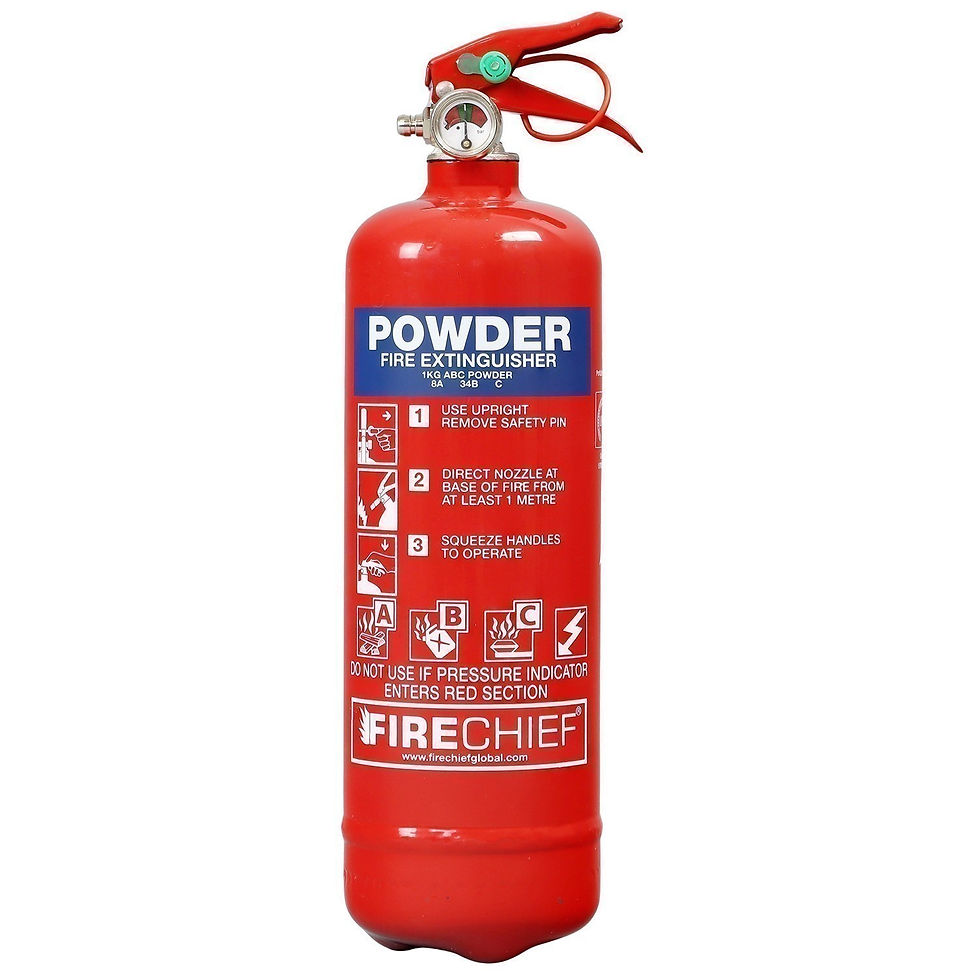
Boat 1kg Powder Fire Extinguisher - MED Approved
The boat's 1kg ABC dry powder fire extinguisher is filled with multi-purpose ABC powder and fights any fire. With MED approval and bears the "Ships Wheel" logo so you know it's tested and suitable for marine use, as well as cars, caravans, holiday flats and boats.
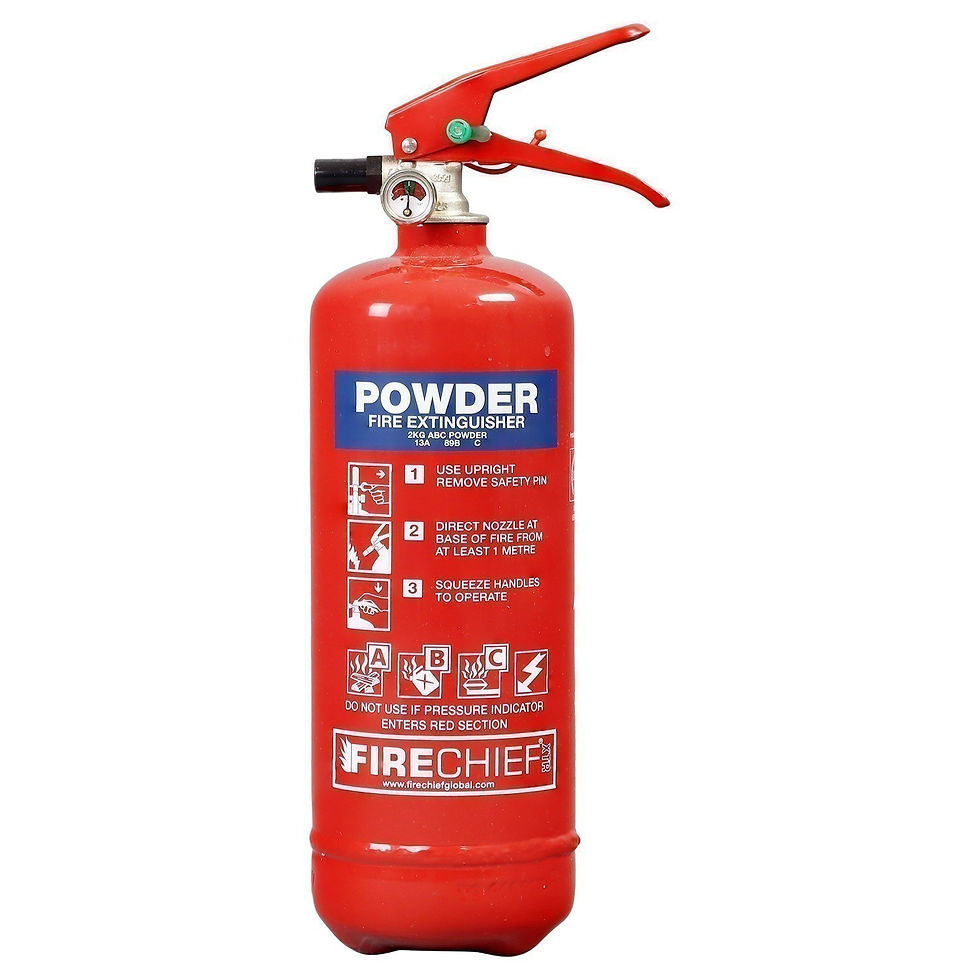
Boat 2kg Powder Fire Extinguisher - MED Approved
This boat 2kg powder fire extinguisher has the BSI Kitemark, CE Mark, comes with a 6 year warranty and is MED approved. With the "Ships Wheel" logo guaranteeing that this is suitable for the tough demands of boats, yachts and marinas, it still has the impressive fire-fighting capabilities as other powders, with a rating of 13A 89B C and is supplied with a hanging bracket that is designed for wall hanging or fixing in a boat, vehicle or truck.
.jpg)
Boat 50kg Powder Fire Extinguisher - MED Approved
The 50kg wheeled powder fire extinguisher brings together high-capacity fire protection and user-friendly design. Engineered for environments with a significant risk of fire, such as ports, refineries, airfields, and warehouses, it’s a trusted tool for first responders and safety personnel.

4kg Launcher Fire Extinguisher – Automatic Powder
Working just like an ordinary fire extinguisher when you’re there but automatically tackling a fire by itself when no-one is around, the 4kg Launcher Powder Fire Extinguisher is the first of its kind. It can be used for Class A, B, and C fires, in addition to those involving electrical equipment.
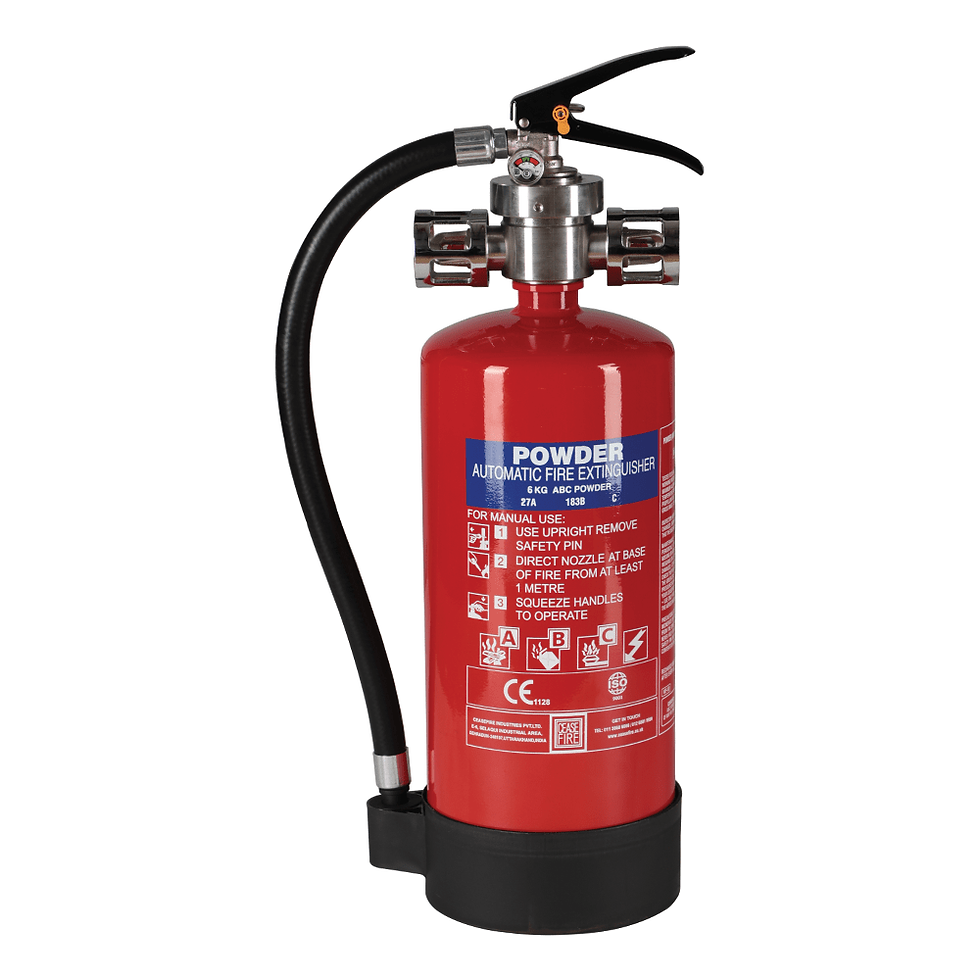
6kg Launcher Fire Extinguisher – Automatic Powder
Working just like an ordinary fire extinguisher when you’re there but automatically tackling a fire by itself when no-one is around, the 6kg Launcher Powder Fire Extinguisher is the first of its kind. It can be used for Class A, B, and C fires, in addition to those involving electrical equipment.

9kg Launcher Fire Extinguisher – Automatic Powder
Working just like an ordinary fire extinguisher when you’re there but automatically tackling a fire by itself when no-one is around, the 9kg Launcher Powder Fire Extinguisher is the first of its kind. It can be used for Class A, B, and C fires, in addition to those involving electrical equipment.
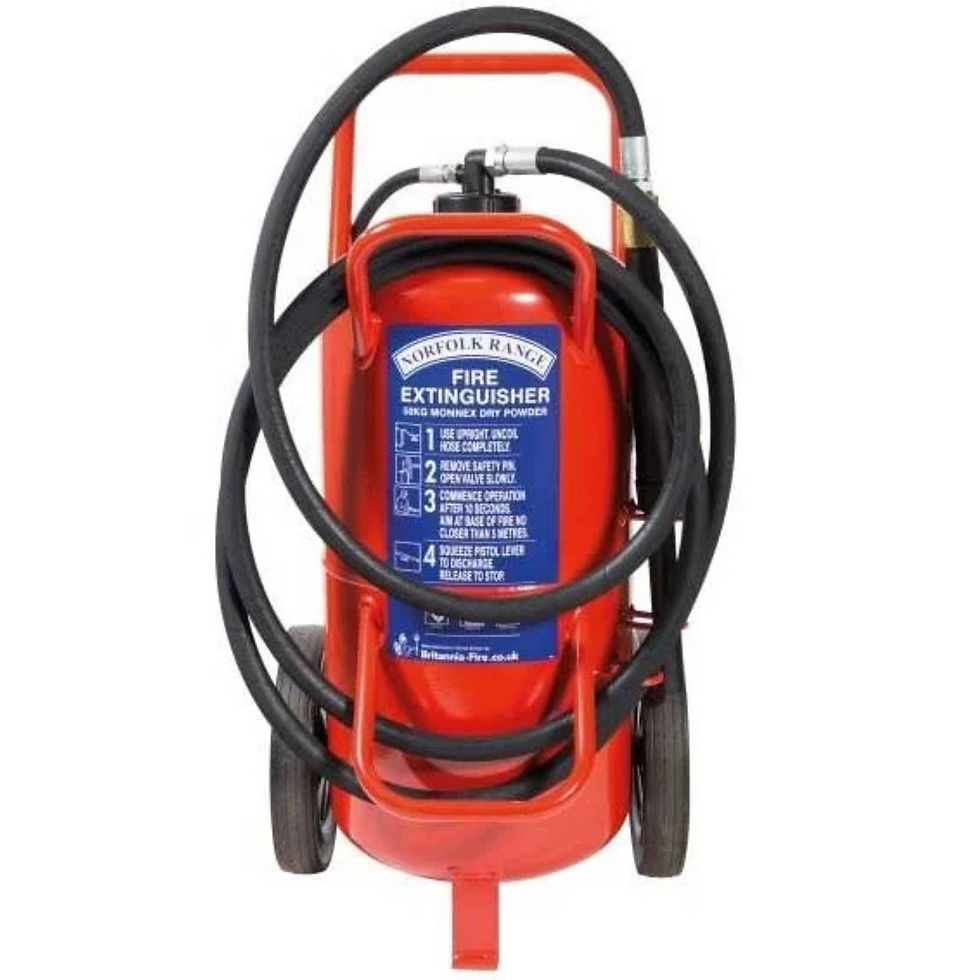
50kg monnex powder extinguisher
Monnex powder is as powerful as you can get in an extinguisher, making the 50kg wheeled fire extinguisher the equivalent of your own fire engine. Manufactured as part of Britannia's Norfolk Range, Monnex works so effectively because each powder particle explodes into three particles on contact with the flames. This increases the surface area of the powder making it knock down the fire much faster.
The residue problem and where powder is not appropriate
Powder extinguishers discharge fine chemical powder that coats every surface within the discharge area. The residue is not toxic in normal quantities but is highly disruptive to clean up and can damage sensitive equipment.
-
Not typically deployed in offices because the discharge would coat computers, papers, and office equipment requiring substantial cleanup and potential equipment replacement
-
Not typically deployed in retail or hospitality because the residue on stock, fixtures, and food-preparation areas would cause substantial commercial disruption.
-
Not typically deployed in server rooms where CO2 delivers equivalent electrical fire cover without residue.
-
Deployed extensively in vehicles, garages, forecourts, workshops, and industrial premises where the residue is acceptable given the operational environment and the fire class flexibility justifies the trade-off.
The rule of thumb: if post-discharge cleanup would cause significant secondary disruption, specify CO2 for electrical cover and foam for flammable liquid cover. If the environment can tolerate powder residue and multi-class cover from a single unit is genuinely valuable, powder is the correct specification.
Positioning, signage, and servicing
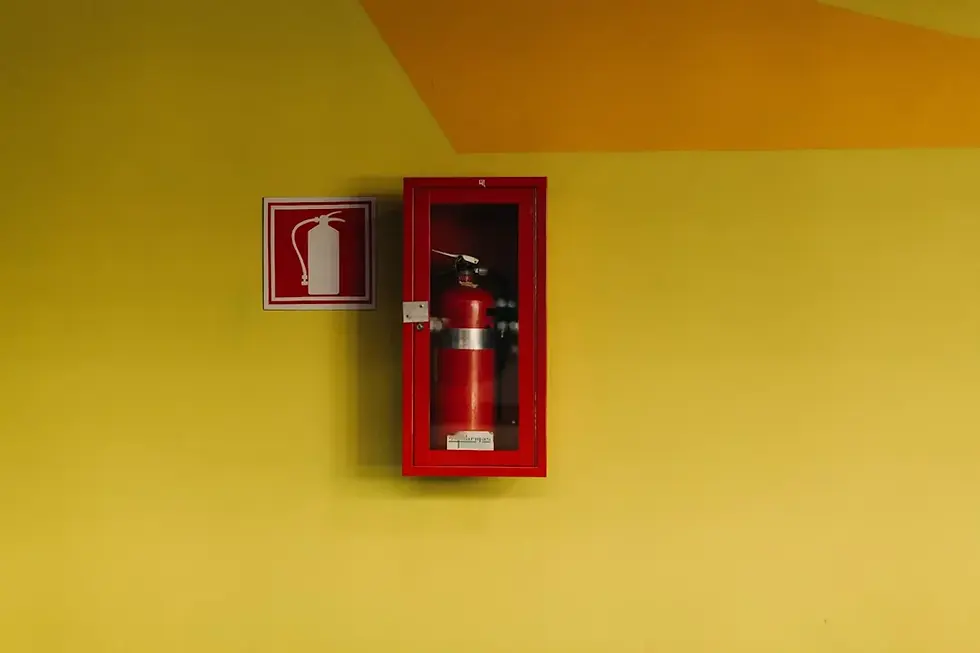
BS 5306-8 specifies positioning based on the specific fire class rating of each unit. ABC powder extinguishers are typically positioned near identified fire hazards rather than at general intervals, because they are deployed for specific risk cover rather than area coverage. Signage must clearly identify powder content and the fire classes addressed.
Servicing follows a slightly different cycle from water and foam extinguishers. Annual basic service under BS 5306-3 is required, but the 5-year extended service (internal inspection) is not required for stored-pressure powder units, though it is required for gas cartridge units. Full replacement is typically required at approximately 20 years. WOSS:UK service reports identify units approaching replacement so you can plan ahead.
When powder is the right specification for your Liverpool premises
Powder is the right specification for premises where multi-class fire cover is genuinely needed, where post-discharge cleanup is acceptable given the operational environment, and where the specific advantages of powder (Class C gas cover, safe outdoor use, effective on electrical infrastructure) matter. Typical Liverpool applications include petrol forecourts (where powder is deployed at fuel pump islands for combined Class B fuel fires and Class C gas fires), commercial vehicles including HGVs and PSVs (where 4kg powder is often specified as minimum vehicle fire cover by transport operators), garages and vehicle service premises across Speke, Aintree, and the wider industrial area, workshops handling flammable gases or extensive flammable liquids, external electrical infrastructure and industrial control gear, chemical stores and premises with mixed hazardous material storage, and industrial premises with process gas use. Powder is not typically the right specification for offices, retail, hospitality, server rooms, or any premises where post-discharge residue would cause substantial commercial disruption. For those environments, CO2 for electrical and foam for flammable liquid cover deliver the required protection without the residue. WOSS:UK fire risk assessments across Merseyside consider both fire class coverage and post-discharge disruption when specifying the correct extinguisher mix. For clients uncertain whether powder is right for their existing specification, we can conduct a review visit as part of the ongoing service contract.
To arrange a powder extinguisher survey or discuss a servicing requirement, please click on any of the buttons below
Frequently Asked Questions
What is a powder fire extinguisher used for?
A powder fire extinguisher, specifically ABC multi-purpose powder, is used for Class A, Class B, and Class C fires plus electrical fires. For Liverpool commercial premises, powder is typically specified for vehicles, garages, workshops, forecourts, and industrial premises where diverse fire risks coexist and post-discharge residue is acceptable given the operational environment.
Powder works by chemically interrupting the combustion reaction. When the powder contacts the fire, it decomposes and releases gases that inhibit the chemical chain reaction that sustains combustion. This mechanism is effective across multiple fire classes, which is why ABC powder is often described as the most versatile extinguisher type. Common Merseyside applications include petrol forecourts across Liverpool and the wider North West, garages and vehicle service premises across the Speke and Aintree industrial areas, workshops handling flammable liquids or gases, HGV and PSV cabs (where 4kg powder is often the required specification), industrial premises with mixed fire hazards, and any premises with significant gas fire risk (LPG, natural gas). Powder is not typically deployed in offices, retail, hospitality, or server rooms because the residue would cause substantial secondary disruption. Powder is not suitable for Class F cooking oil fires. For applications requiring the versatility of powder without the residue, water mist extinguishers or Firexo units are increasingly specified as alternatives.
Why do powder extinguishers leave so much residue?
Powder extinguishers discharge fine chemical powder that coats every surface within the discharge area, and the fine particle size means the powder settles slowly and reaches locations well beyond the immediate fire zone. For Liverpool premises where post-discharge cleanup would cause significant secondary disruption (offices, retail, hospitality, server rooms), CO2 or foam alternatives are typically preferred despite covering fewer fire classes.
The residue is a physical characteristic of how the powder works rather than a flaw. To effectively suppress fires across multiple classes, the powder must reach the burning material as fine particles distributed evenly across the fire surface. The same fine particle size that makes the extinguisher effective also means the powder does not settle immediately after discharge; it drifts through the environment on air currents and coats surfaces well beyond the discharge line-of-sight. The residue itself is not toxic and is not hazardous to handle, but cleanup requires substantial vacuuming, wet cleaning of hard surfaces, and often disposal of items that cannot be effectively cleaned (paper, food, textiles, upholstered furniture). For commercial premises where operational continuity matters, the cleanup can involve several days of business disruption. This is why powder is typically deployed in environments where operations can tolerate the disruption (forecourts, workshops, industrial premises) rather than in office or hospitality environments where cleanup would be disruptive. WOSS:UK fire risk assessments across Liverpool consider both fire class coverage and post-discharge disruption when specifying the extinguisher mix for each zone of your premises.
What size powder extinguisher do I need for my Liverpool premises?
For most Liverpool commercial premises using powder, 6kg ABC powder extinguishers are the standard specification for workshop, forecourt, and industrial cover. 4kg units are commonly deployed in HGVs and larger vehicles, while 2kg units cover smaller vehicles and specific small workshop applications. 9kg units are specified for extended-duration cover in larger industrial premises.
Sizing decisions consider the specific fire hazards present, the physical size of the area to be covered, the accessibility of the extinguisher position and user strength, and any specific regulatory requirements. Vehicle-carried extinguishers face weight and space constraints, which typically drives 2kg or 4kg specification depending on vehicle type. Forecourts across Merseyside typically deploy 6kg or 9kg units positioned at fuel pump islands. Workshops and industrial premises typically deploy 6kg units at general fire hazards with additional units near specific high-risk positions. HGV cab extinguishers are often specified as 2kg by transport operators as a minimum, though 4kg is preferred for genuine effectiveness. The BS 5306-8 selection standard specifies extinguisher rating (not physical size) as the compliance measure, and the correct rating depends on the specific hazards identified in your fire risk assessment. WOSS:UK conducts a survey visit as part of every quotation across Liverpool and the North West so we can specify the correct sizes and positions for your specific premises rather than defaulting to a template.
Can I use a powder extinguisher on an electrical fire?
Yes. ABC powder fire extinguishers are safe to use on live electrical equipment because dry chemical powder does not conduct electricity. However, CO2 is typically preferred for electrical fire cover in Liverpool office and IT environments because CO2 leaves no residue, while powder can damage sensitive electronic equipment through residue contamination.
The safe use of powder on electrical equipment is one of the reasons ABC powder is specified for external electrical infrastructure, industrial control gear, forecourt electrical systems, and any premises where the electrical fire risk requires dedicated cover but CO2 is impractical due to size, position, or environmental factors. Powder is particularly appropriate for external electrical fire cover because CO2 disperses rapidly in outdoor environments and provides limited suppression duration. However, for indoor electrical fire cover in offices, server rooms, IT-heavy environments, and any premises with sensitive electronic equipment, CO2 is almost always the correct specification because the residue-free discharge preserves the equipment from secondary damage. Powder residue can cause corrosion on printed circuit boards, contamination of electrical contacts, and cleanup issues that dramatically increase the total cost of a fire incident. For premises requiring both external and internal electrical fire cover, WOSS:UK typically specifies CO2 for internal positions and powder for external positions, delivering the correct extinguisher for each specific environment. Voltage limits apply for all extinguisher types on very high voltage equipment (typically above 1,000V), and specialist advice should be sought for such installations.
How often should powder fire extinguishers be serviced?
Powder fire extinguishers in Liverpool commercial premises must be serviced annually by a competent engineer under BS 5306-3, with full replacement typically required at approximately 20 years. Unlike water and foam extinguishers, stored-pressure ABC powder units do not require the 5-year extended internal inspection, though gas cartridge units do. WOSS:UK operates a scheduled service programme across Merseyside so anniversaries are never missed.
The annual service is a legal requirement under the Regulatory Reform (Fire Safety) Order 2005 and a standard commercial insurance condition. Every WOSS:UK annual service visit covers external condition inspection, weight verification (powder settling within the extinguisher is the primary failure mode and requires attention if identified), pressure verification for stored-pressure units, seal and pin condition, discharge hose and nozzle condition, and label update confirming next service due date. Powder settling occurs when the extinguisher is left undisturbed for extended periods, and the powder compacts at the bottom of the extinguisher body. Compacted powder does not discharge properly, which reduces the effectiveness of the extinguisher. WOSS:UK engineers typically invert and shake stored-pressure powder units during annual service to prevent settling, and this practice can also be trained to your staff as a monthly informal check. Gas cartridge powder units require the 5-year extended service including internal inspection because the pressure integrity depends on the separate gas cartridge condition. Full replacement at approximately 20 years reflects the design life of the extinguisher body beyond which pressure integrity cannot be guaranteed.


